Himalayan Diamond Salt
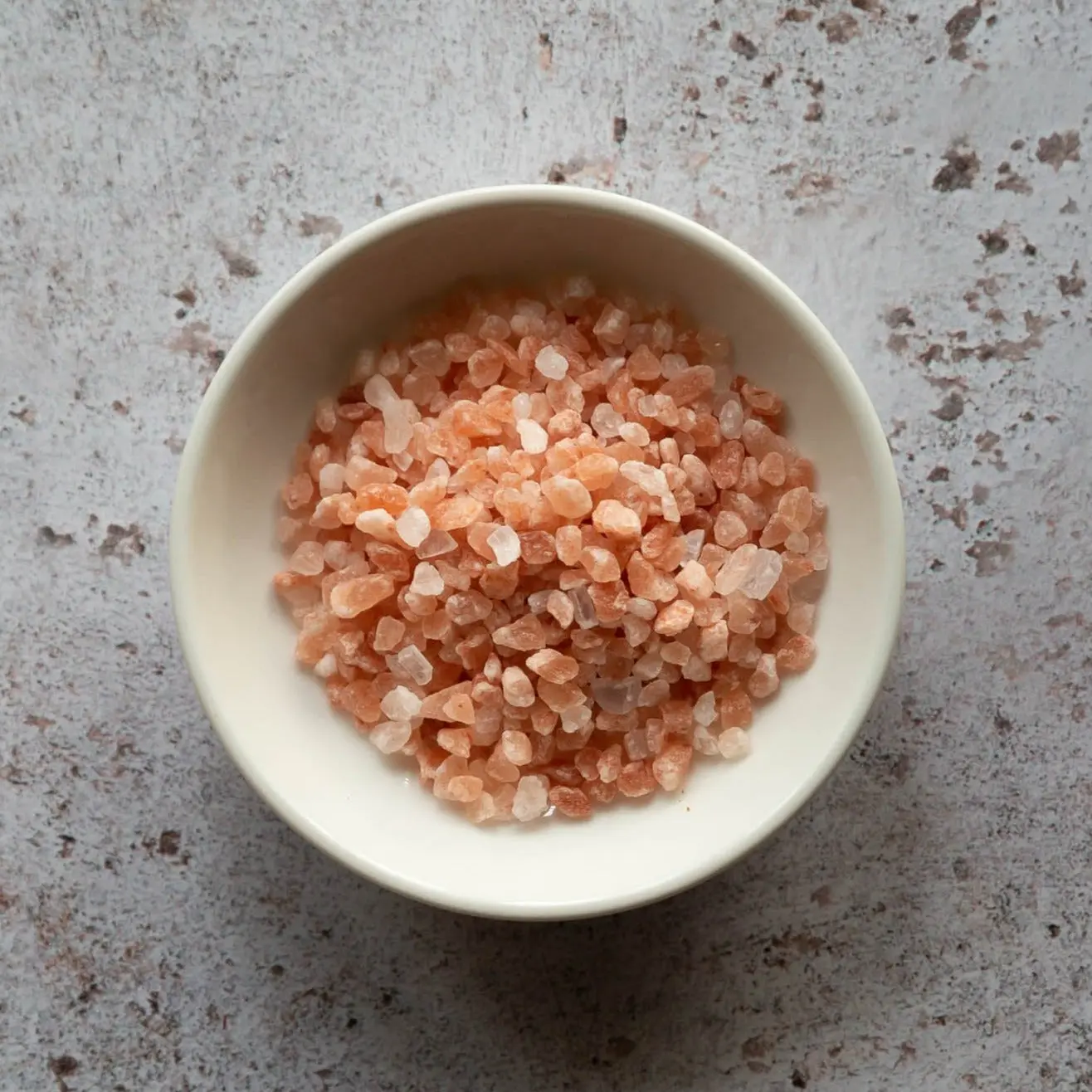
Himalayan pink salt has become ubiquitous — but most of what is sold under that name is a pale, lightly blushed product that bears little resemblance to the genuine article. This is the real thing. Terre Exotique's diamond salt is hand-extracted from the vast Khewra mines in northern Pakistan, which sit beneath the Himalayan mountain range and contain an estimated 6.7 billion tonnes of salt. The crystals formed roughly 200 million years ago when the collision of the Indo-Australian and Eurasian tectonic plates closed the ancient Tethys Ocean, and the slow evaporation of that ocean left behind salt deposits rich in minerals and trace elements. The result is a deep pink to red crystal — the colour comes from its iron content — with a gem-like clarity that earned it the name "diamond salt."
The flavour is subtly different from sea salt: slightly less sharp, with a rounder, more neutral character that accommodates virtually any dish without imposing itself. It is rich in magnesium and iron, and its dry crystal structure makes it well suited to a salt mill. Alexander the Great is credited with first bringing this salt to Europe around 350 BC, and for centuries it was reserved for royalty and religious leaders. Today it serves as a premium everyday salt — equally at home in a mill on the dinner table as it is used as a finishing salt over grilled meats, seafood, and vegetables.
Producer: Terre Exotique, a French spice house founded in 1998 after its founder discovered Penja pepper on a plantation in Cameroon. The company sources directly from growers worldwide and processes at its facility in France, maintaining close relationships with producers to ensure traceability and quality across its range.
Storage: Ambient. Store in a dry place.
Net: 280g
Himalayan pink salt has become ubiquitous — but most of what is sold under that name is a pale, lightly blushed product that bears little resemblance to the genuine article. This is the real thing. Terre Exotique's diamond salt is hand-extracted from the vast Khewra mines in northern Pakistan, which sit beneath the Himalayan mountain range and contain an estimated 6.7 billion tonnes of salt. The crystals formed roughly 200 million years ago when the collision of the Indo-Australian and Eurasian tectonic plates closed the ancient Tethys Ocean, and the slow evaporation of that ocean left behind salt deposits rich in minerals and trace elements. The result is a deep pink to red crystal — the colour comes from its iron content — with a gem-like clarity that earned it the name "diamond salt."
The flavour is subtly different from sea salt: slightly less sharp, with a rounder, more neutral character that accommodates virtually any dish without imposing itself. It is rich in magnesium and iron, and its dry crystal structure makes it well suited to a salt mill. Alexander the Great is credited with first bringing this salt to Europe around 350 BC, and for centuries it was reserved for royalty and religious leaders. Today it serves as a premium everyday salt — equally at home in a mill on the dinner table as it is used as a finishing salt over grilled meats, seafood, and vegetables.
Producer: Terre Exotique, a French spice house founded in 1998 after its founder discovered Penja pepper on a plantation in Cameroon. The company sources directly from growers worldwide and processes at its facility in France, maintaining close relationships with producers to ensure traceability and quality across its range.
Storage: Ambient. Store in a dry place.
Net: 280g
Original: $10.83
-70%$10.83
$3.25Description
Himalayan pink salt has become ubiquitous — but most of what is sold under that name is a pale, lightly blushed product that bears little resemblance to the genuine article. This is the real thing. Terre Exotique's diamond salt is hand-extracted from the vast Khewra mines in northern Pakistan, which sit beneath the Himalayan mountain range and contain an estimated 6.7 billion tonnes of salt. The crystals formed roughly 200 million years ago when the collision of the Indo-Australian and Eurasian tectonic plates closed the ancient Tethys Ocean, and the slow evaporation of that ocean left behind salt deposits rich in minerals and trace elements. The result is a deep pink to red crystal — the colour comes from its iron content — with a gem-like clarity that earned it the name "diamond salt."
The flavour is subtly different from sea salt: slightly less sharp, with a rounder, more neutral character that accommodates virtually any dish without imposing itself. It is rich in magnesium and iron, and its dry crystal structure makes it well suited to a salt mill. Alexander the Great is credited with first bringing this salt to Europe around 350 BC, and for centuries it was reserved for royalty and religious leaders. Today it serves as a premium everyday salt — equally at home in a mill on the dinner table as it is used as a finishing salt over grilled meats, seafood, and vegetables.
Producer: Terre Exotique, a French spice house founded in 1998 after its founder discovered Penja pepper on a plantation in Cameroon. The company sources directly from growers worldwide and processes at its facility in France, maintaining close relationships with producers to ensure traceability and quality across its range.
Storage: Ambient. Store in a dry place.
Net: 280g