Golden Peaches
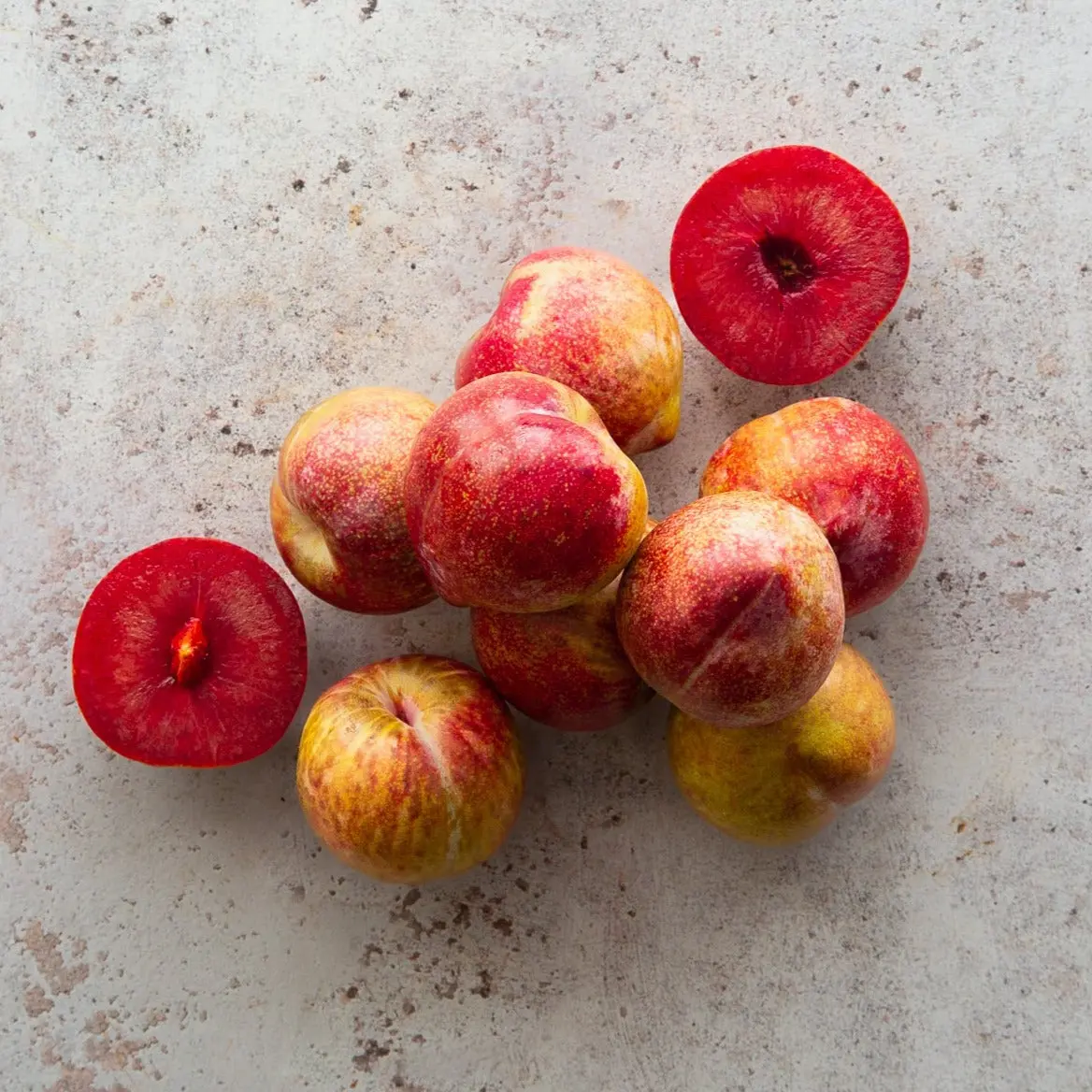
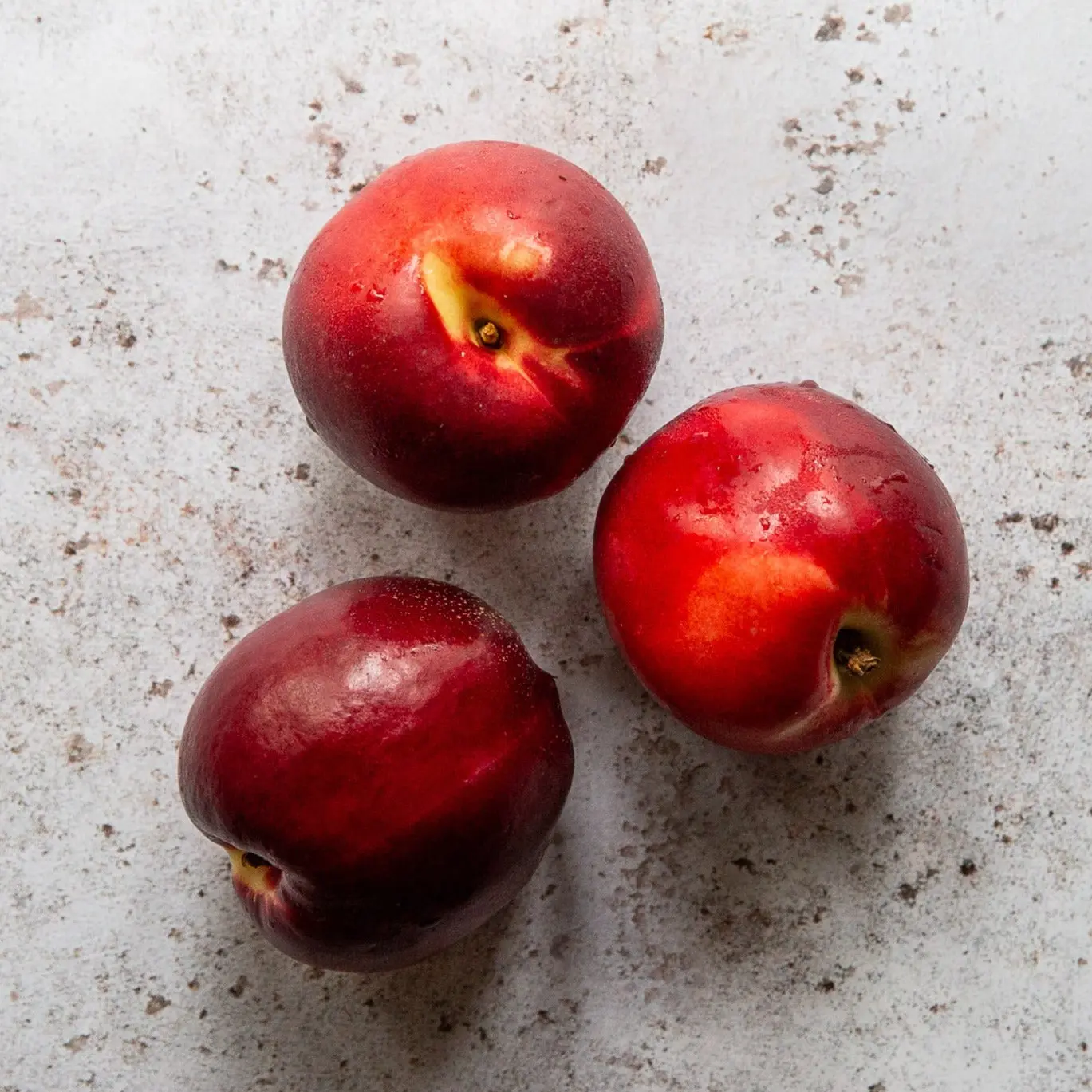
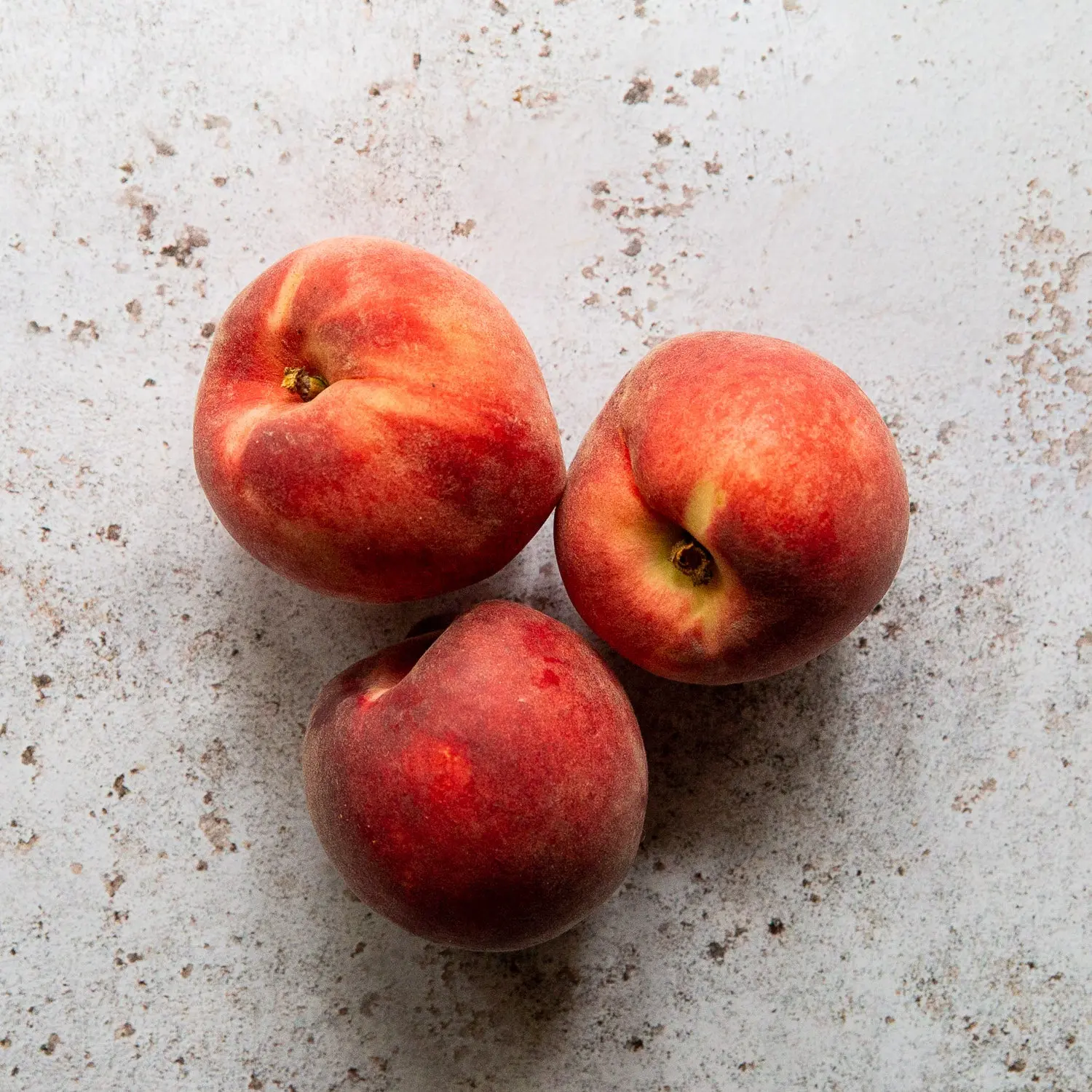
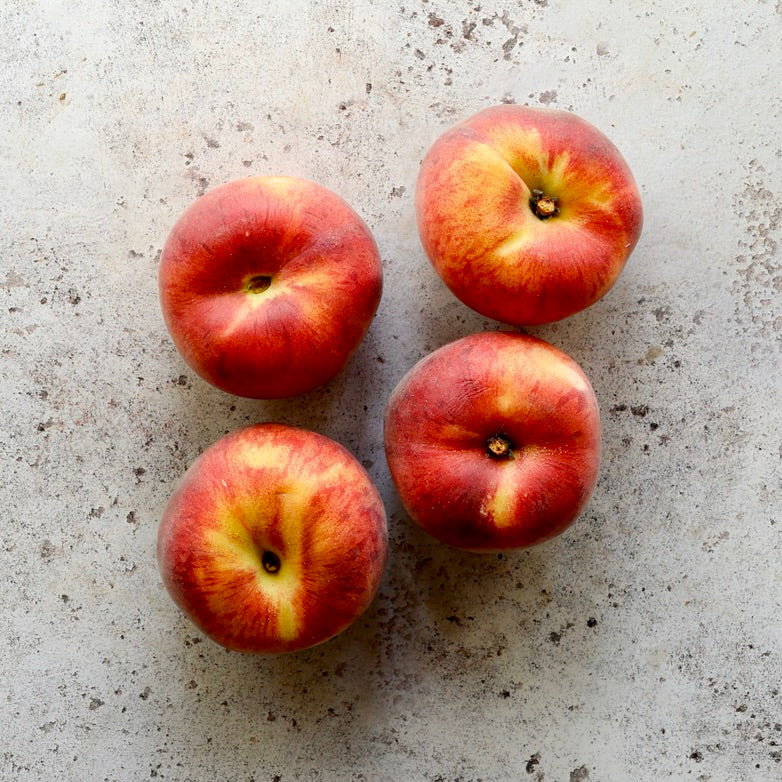
Yellow-fleshed peaches from Seville — the same species as the golden nectarines (Prunus persica), from the same Andalusian growing region, distinguished only by the skin. A peach carries a layer of fine fuzz — trichomes — on its surface, controlled by a single dominant gene. A nectarine is a peach without the fuzz. Everything else — flesh colour, sugar content, growing conditions — is determined by the specific cultivar, not by whether the skin is smooth or downy.
The fuzz is not cosmetic. Trichomes serve a purpose on the tree: they trap moisture, deter certain insects, and provide a degree of UV protection for the developing fruit. From an eating perspective, the practical difference is that a peach skin has a slightly different mouthfeel — softer and more velvety — and holds onto flavour compounds differently. Some people find peach skin slightly bitter; others barely notice it. Either way, the flesh beneath is what matters, and in a ripe yellow-fleshed Sevillian peach that flesh is soft, deeply juicy, and honeyed in a way that white-fleshed varieties are not.
Peaches are climacteric fruit — they continue to ripen after harvest, driven by ethylene gas production. If they arrive firm, leave them at room temperature for a day or two until the shoulder gives gently under pressure and the fragrance is noticeable. Once ripe, use within a couple of days. Do not refrigerate unless absolutely necessary — cold storage causes chilling injury in stone fruit, breaking down the cell walls and producing the dry, mealy texture that makes a bad peach so disappointing. If you must chill a ripe peach to slow it down, bring it back to room temperature before eating.
Origin: Seville, Spain
Ingredients: Golden peaches (Prunus persica).
Yellow-fleshed peaches from Seville — the same species as the golden nectarines (Prunus persica), from the same Andalusian growing region, distinguished only by the skin. A peach carries a layer of fine fuzz — trichomes — on its surface, controlled by a single dominant gene. A nectarine is a peach without the fuzz. Everything else — flesh colour, sugar content, growing conditions — is determined by the specific cultivar, not by whether the skin is smooth or downy.
The fuzz is not cosmetic. Trichomes serve a purpose on the tree: they trap moisture, deter certain insects, and provide a degree of UV protection for the developing fruit. From an eating perspective, the practical difference is that a peach skin has a slightly different mouthfeel — softer and more velvety — and holds onto flavour compounds differently. Some people find peach skin slightly bitter; others barely notice it. Either way, the flesh beneath is what matters, and in a ripe yellow-fleshed Sevillian peach that flesh is soft, deeply juicy, and honeyed in a way that white-fleshed varieties are not.
Peaches are climacteric fruit — they continue to ripen after harvest, driven by ethylene gas production. If they arrive firm, leave them at room temperature for a day or two until the shoulder gives gently under pressure and the fragrance is noticeable. Once ripe, use within a couple of days. Do not refrigerate unless absolutely necessary — cold storage causes chilling injury in stone fruit, breaking down the cell walls and producing the dry, mealy texture that makes a bad peach so disappointing. If you must chill a ripe peach to slow it down, bring it back to room temperature before eating.
Origin: Seville, Spain
Ingredients: Golden peaches (Prunus persica).
Description
Yellow-fleshed peaches from Seville — the same species as the golden nectarines (Prunus persica), from the same Andalusian growing region, distinguished only by the skin. A peach carries a layer of fine fuzz — trichomes — on its surface, controlled by a single dominant gene. A nectarine is a peach without the fuzz. Everything else — flesh colour, sugar content, growing conditions — is determined by the specific cultivar, not by whether the skin is smooth or downy.
The fuzz is not cosmetic. Trichomes serve a purpose on the tree: they trap moisture, deter certain insects, and provide a degree of UV protection for the developing fruit. From an eating perspective, the practical difference is that a peach skin has a slightly different mouthfeel — softer and more velvety — and holds onto flavour compounds differently. Some people find peach skin slightly bitter; others barely notice it. Either way, the flesh beneath is what matters, and in a ripe yellow-fleshed Sevillian peach that flesh is soft, deeply juicy, and honeyed in a way that white-fleshed varieties are not.
Peaches are climacteric fruit — they continue to ripen after harvest, driven by ethylene gas production. If they arrive firm, leave them at room temperature for a day or two until the shoulder gives gently under pressure and the fragrance is noticeable. Once ripe, use within a couple of days. Do not refrigerate unless absolutely necessary — cold storage causes chilling injury in stone fruit, breaking down the cell walls and producing the dry, mealy texture that makes a bad peach so disappointing. If you must chill a ripe peach to slow it down, bring it back to room temperature before eating.
Origin: Seville, Spain
Ingredients: Golden peaches (Prunus persica).