Jerusalem Artichokes
2. DESCRIPTION
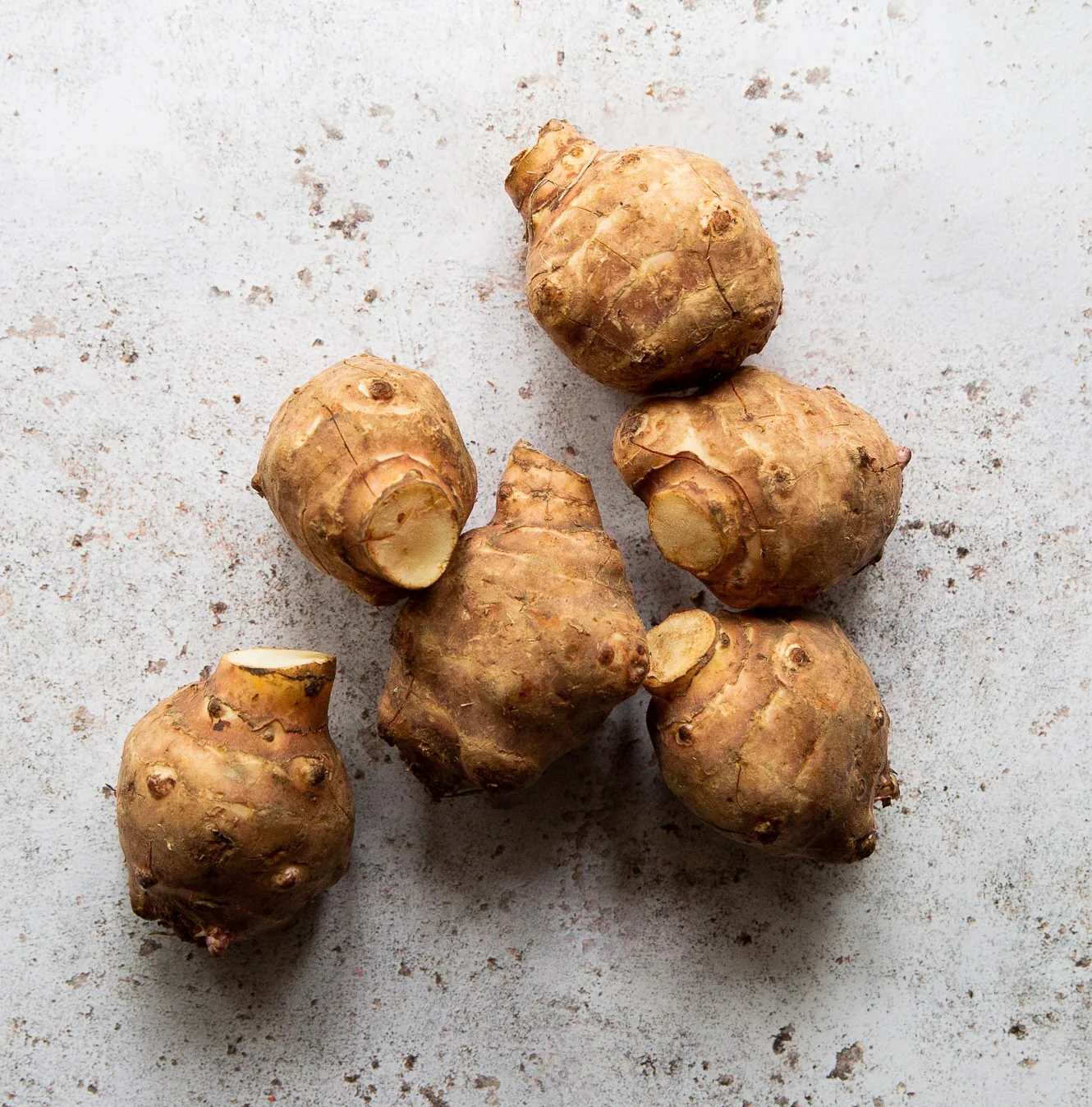
Jerusalem artichokes (Helianthus tuberosus) from France — the knobbly, thin-skinned winter tuber that has nothing to do with Jerusalem and nothing to do with artichokes. It is a species of sunflower, native to North America, and the name is thought to derive from the Italian girasole (sunflower) corrupted into "Jerusalem" over time. The flavour connection to globe artichokes is real, though — there is a shared nuttiness that explains why the comparison stuck.
The tubers are irregular in shape, pale-skinned and often awkward to peel, which is why most preparations either leave the skin on or avoid peeling altogether. The flesh is white, crisp when raw, and has a distinctive nutty sweetness with mineral undertones that intensify with roasting. Cooked, the texture can range from firm and waxy to completely smooth depending on method — roasted they caramelise and hold some bite; simmered and blended they produce one of the silkiest soups in the winter repertoire. Jerusalem artichokes store their carbohydrate as inulin rather than starch, which gives them their sweetness but also means they can cause digestive discomfort in quantity — something worth being aware of if you are not used to eating them.
Origin: France
Ingredients: Jerusalem artichokes (Helianthus tuberosus)
Storage: Store in the fridge in a paper bag. The thin skin dehydrates quickly in open air. Use within a week.
2. DESCRIPTION
Jerusalem artichokes (Helianthus tuberosus) from France — the knobbly, thin-skinned winter tuber that has nothing to do with Jerusalem and nothing to do with artichokes. It is a species of sunflower, native to North America, and the name is thought to derive from the Italian girasole (sunflower) corrupted into "Jerusalem" over time. The flavour connection to globe artichokes is real, though — there is a shared nuttiness that explains why the comparison stuck.
The tubers are irregular in shape, pale-skinned and often awkward to peel, which is why most preparations either leave the skin on or avoid peeling altogether. The flesh is white, crisp when raw, and has a distinctive nutty sweetness with mineral undertones that intensify with roasting. Cooked, the texture can range from firm and waxy to completely smooth depending on method — roasted they caramelise and hold some bite; simmered and blended they produce one of the silkiest soups in the winter repertoire. Jerusalem artichokes store their carbohydrate as inulin rather than starch, which gives them their sweetness but also means they can cause digestive discomfort in quantity — something worth being aware of if you are not used to eating them.
Origin: France
Ingredients: Jerusalem artichokes (Helianthus tuberosus)
Storage: Store in the fridge in a paper bag. The thin skin dehydrates quickly in open air. Use within a week.
Description
2. DESCRIPTION
Jerusalem artichokes (Helianthus tuberosus) from France — the knobbly, thin-skinned winter tuber that has nothing to do with Jerusalem and nothing to do with artichokes. It is a species of sunflower, native to North America, and the name is thought to derive from the Italian girasole (sunflower) corrupted into "Jerusalem" over time. The flavour connection to globe artichokes is real, though — there is a shared nuttiness that explains why the comparison stuck.
The tubers are irregular in shape, pale-skinned and often awkward to peel, which is why most preparations either leave the skin on or avoid peeling altogether. The flesh is white, crisp when raw, and has a distinctive nutty sweetness with mineral undertones that intensify with roasting. Cooked, the texture can range from firm and waxy to completely smooth depending on method — roasted they caramelise and hold some bite; simmered and blended they produce one of the silkiest soups in the winter repertoire. Jerusalem artichokes store their carbohydrate as inulin rather than starch, which gives them their sweetness but also means they can cause digestive discomfort in quantity — something worth being aware of if you are not used to eating them.
Origin: France
Ingredients: Jerusalem artichokes (Helianthus tuberosus)
Storage: Store in the fridge in a paper bag. The thin skin dehydrates quickly in open air. Use within a week.