Polène Provence Tomatoes
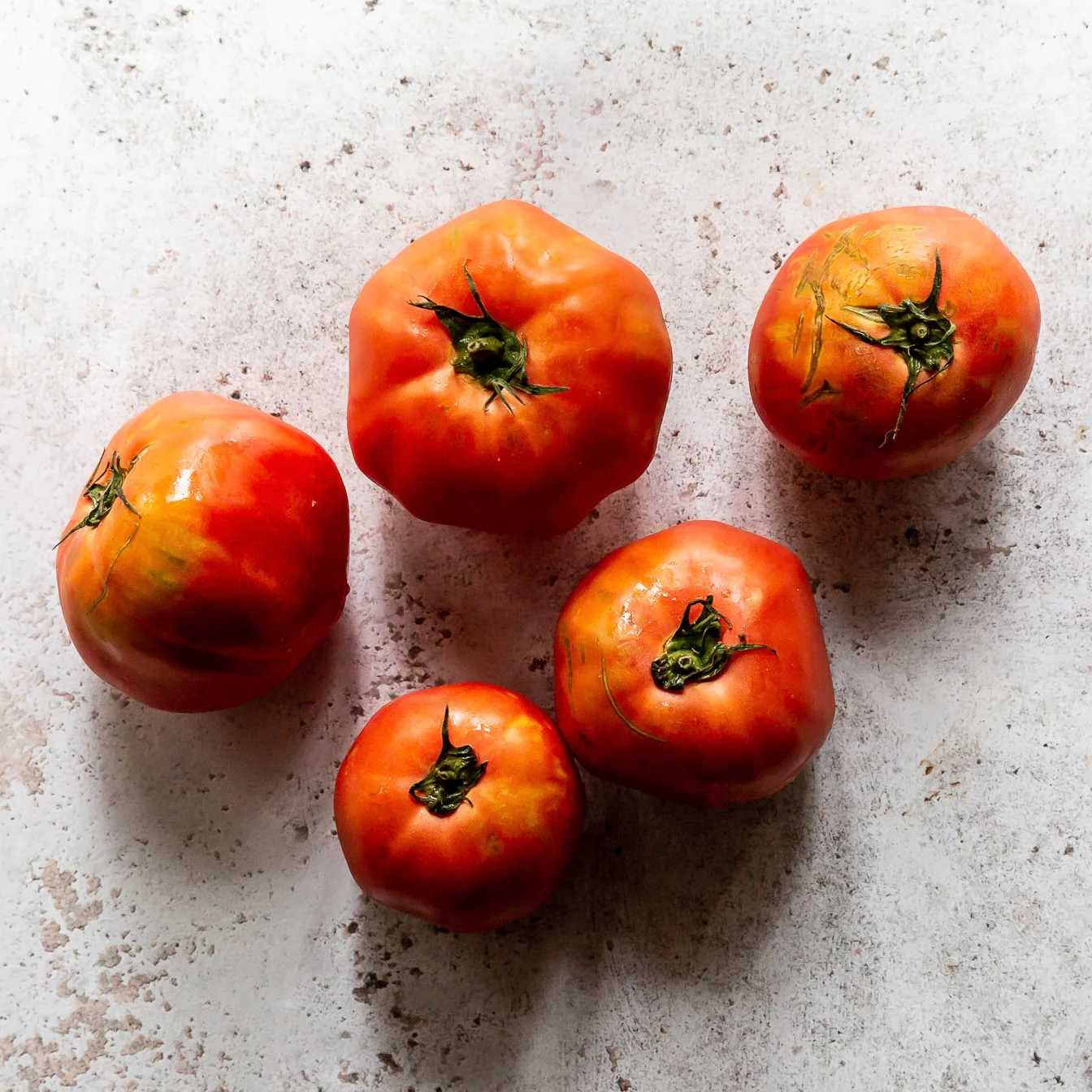
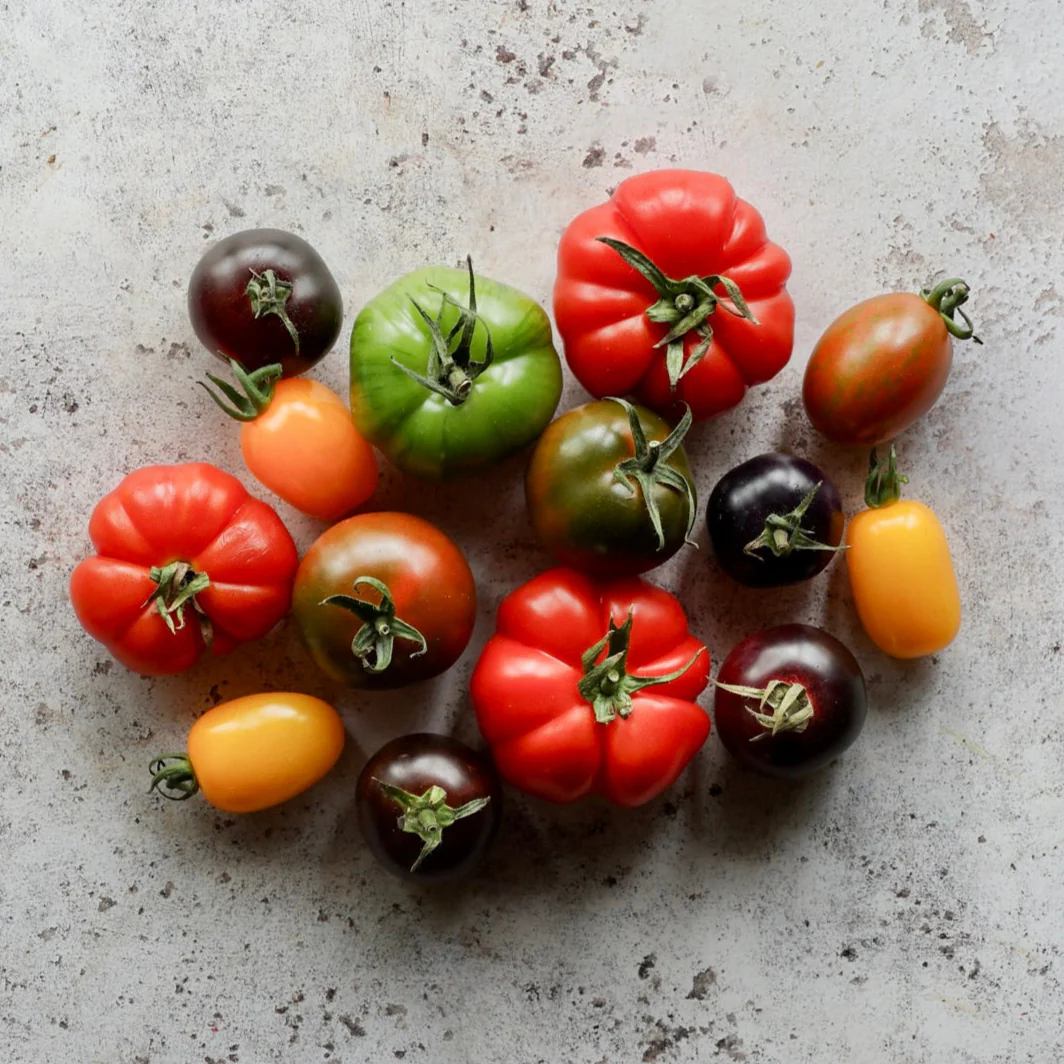
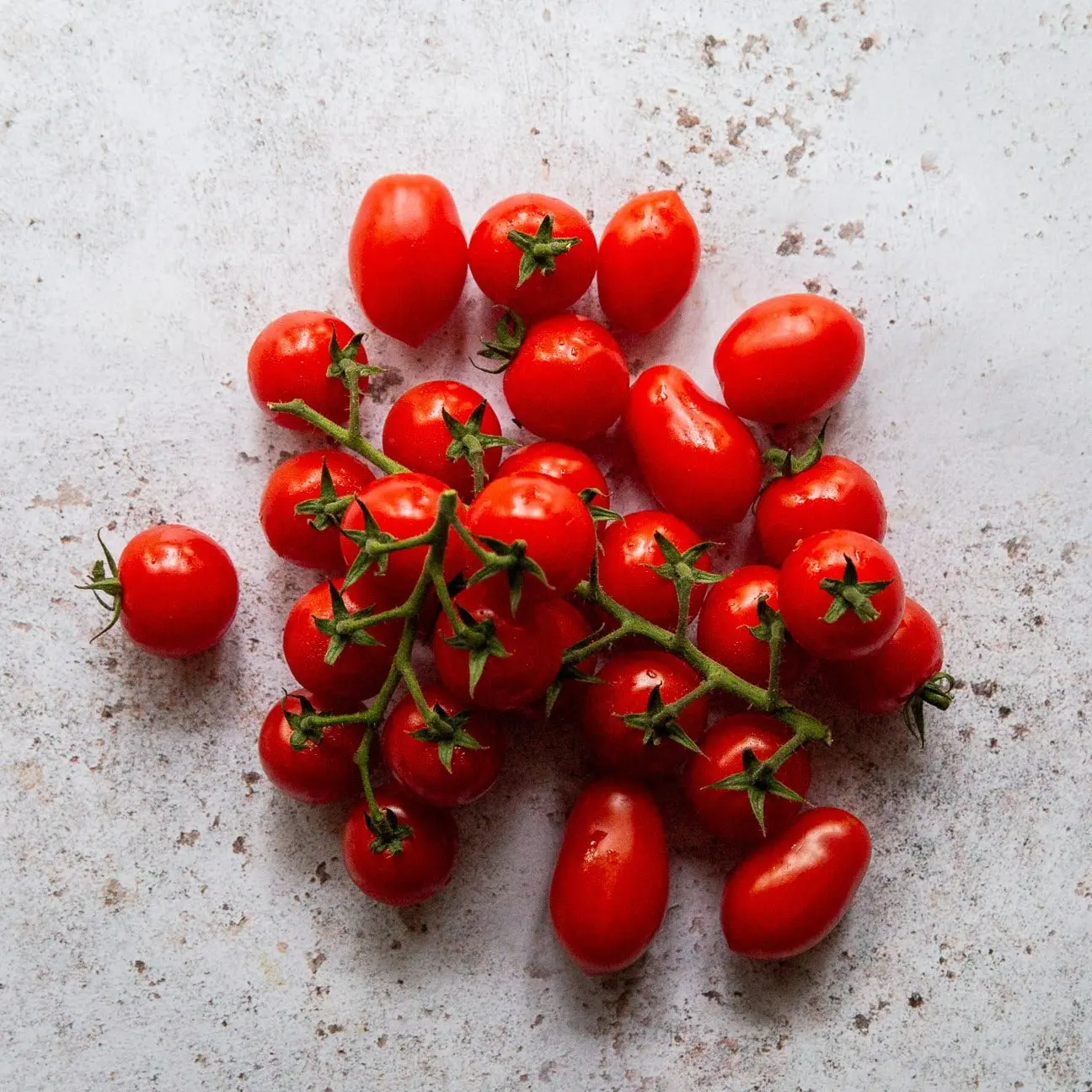
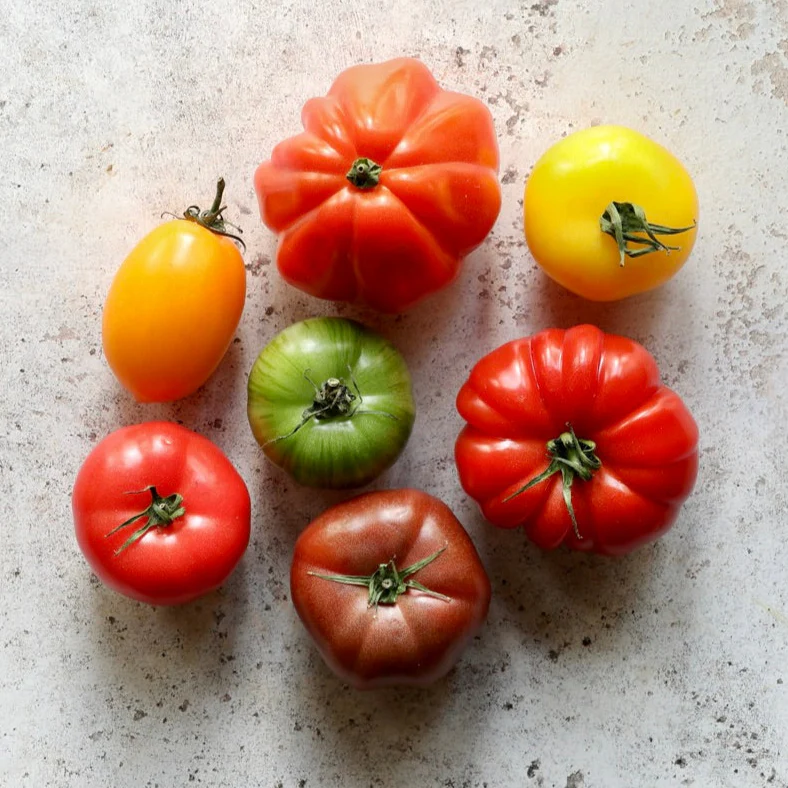
A mixed selection of heritage tomato varieties grown by Polène — a collective of five growers in Provence, founded in 2021. The mix typically includes varieties such as Rose de Berne, Black Krim, Coeur-de-Boeuf, Copia, and Moya, though the exact composition changes depending on what is at its best at the time of picking. These are full-sized tomatoes, not cherry or baby varieties — expect a mix of shapes, sizes, and colours in the same kilo.
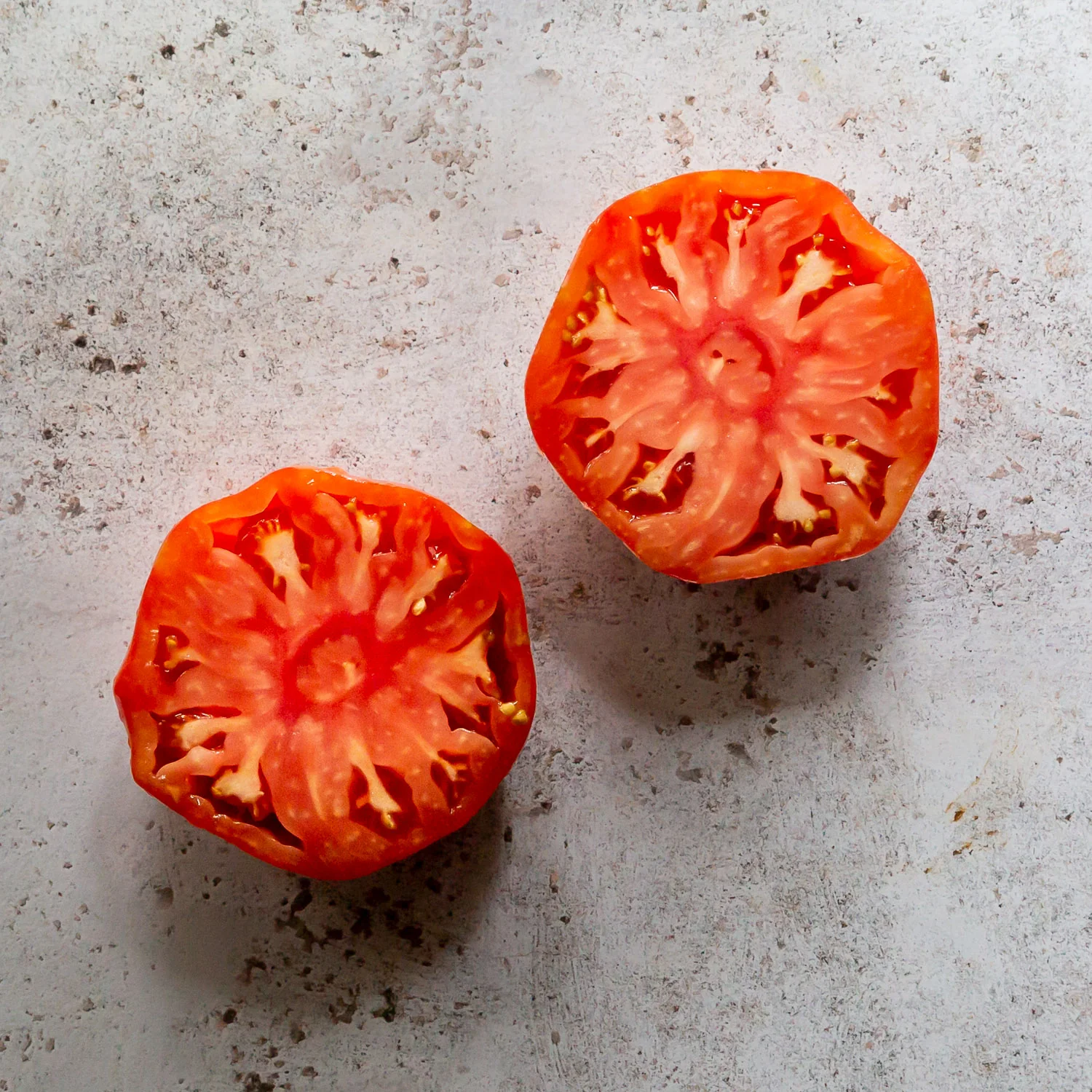
The point of heritage tomato varieties — as opposed to modern commercial cultivars — is that they were selected over generations for flavour rather than for shelf life, uniform appearance, or transport durability. A Rose de Berne is a thin-skinned pink tomato with a soft, almost melting flesh and a sweetness that has very little acidity behind it. A Black Krim is a dark, almost mahogany-skinned variety from the Black Sea region with a deeper, more savoury, umami-heavy flavour and a denser texture. A Coeur-de-Boeuf (ox heart) is large, ribbed, meaty, and low in juice — it slices into thick steaks rather than collapsing into water. Each variety brings something different to the plate, which is why a mixed selection is more interesting to eat than a kilo of identical fruit.
The trade-off with heritage varieties is always the same: the flavour is better but the fruit is more fragile, less uniform, and does not last as long. These are not tomatoes to buy and leave in the fridge for a week. Store at room temperature and eat within a few days. The skins may be thinner, the shapes irregular, and the odd blemish is normal — none of which affects what matters, which is the flavour.
Producer: Polène — Provence, France.
Ingredients: Mixed heritage tomatoes.
Storage: Room temperature. Use within a few days.
A mixed selection of heritage tomato varieties grown by Polène — a collective of five growers in Provence, founded in 2021. The mix typically includes varieties such as Rose de Berne, Black Krim, Coeur-de-Boeuf, Copia, and Moya, though the exact composition changes depending on what is at its best at the time of picking. These are full-sized tomatoes, not cherry or baby varieties — expect a mix of shapes, sizes, and colours in the same kilo.
The point of heritage tomato varieties — as opposed to modern commercial cultivars — is that they were selected over generations for flavour rather than for shelf life, uniform appearance, or transport durability. A Rose de Berne is a thin-skinned pink tomato with a soft, almost melting flesh and a sweetness that has very little acidity behind it. A Black Krim is a dark, almost mahogany-skinned variety from the Black Sea region with a deeper, more savoury, umami-heavy flavour and a denser texture. A Coeur-de-Boeuf (ox heart) is large, ribbed, meaty, and low in juice — it slices into thick steaks rather than collapsing into water. Each variety brings something different to the plate, which is why a mixed selection is more interesting to eat than a kilo of identical fruit.
The trade-off with heritage varieties is always the same: the flavour is better but the fruit is more fragile, less uniform, and does not last as long. These are not tomatoes to buy and leave in the fridge for a week. Store at room temperature and eat within a few days. The skins may be thinner, the shapes irregular, and the odd blemish is normal — none of which affects what matters, which is the flavour.
Producer: Polène — Provence, France.
Ingredients: Mixed heritage tomatoes.
Storage: Room temperature. Use within a few days.
Original: $18.27
-70%$18.27
$5.48Description
A mixed selection of heritage tomato varieties grown by Polène — a collective of five growers in Provence, founded in 2021. The mix typically includes varieties such as Rose de Berne, Black Krim, Coeur-de-Boeuf, Copia, and Moya, though the exact composition changes depending on what is at its best at the time of picking. These are full-sized tomatoes, not cherry or baby varieties — expect a mix of shapes, sizes, and colours in the same kilo.
The point of heritage tomato varieties — as opposed to modern commercial cultivars — is that they were selected over generations for flavour rather than for shelf life, uniform appearance, or transport durability. A Rose de Berne is a thin-skinned pink tomato with a soft, almost melting flesh and a sweetness that has very little acidity behind it. A Black Krim is a dark, almost mahogany-skinned variety from the Black Sea region with a deeper, more savoury, umami-heavy flavour and a denser texture. A Coeur-de-Boeuf (ox heart) is large, ribbed, meaty, and low in juice — it slices into thick steaks rather than collapsing into water. Each variety brings something different to the plate, which is why a mixed selection is more interesting to eat than a kilo of identical fruit.
The trade-off with heritage varieties is always the same: the flavour is better but the fruit is more fragile, less uniform, and does not last as long. These are not tomatoes to buy and leave in the fridge for a week. Store at room temperature and eat within a few days. The skins may be thinner, the shapes irregular, and the odd blemish is normal — none of which affects what matters, which is the flavour.
Producer: Polène — Provence, France.
Ingredients: Mixed heritage tomatoes.
Storage: Room temperature. Use within a few days.