Saint-Marcellin
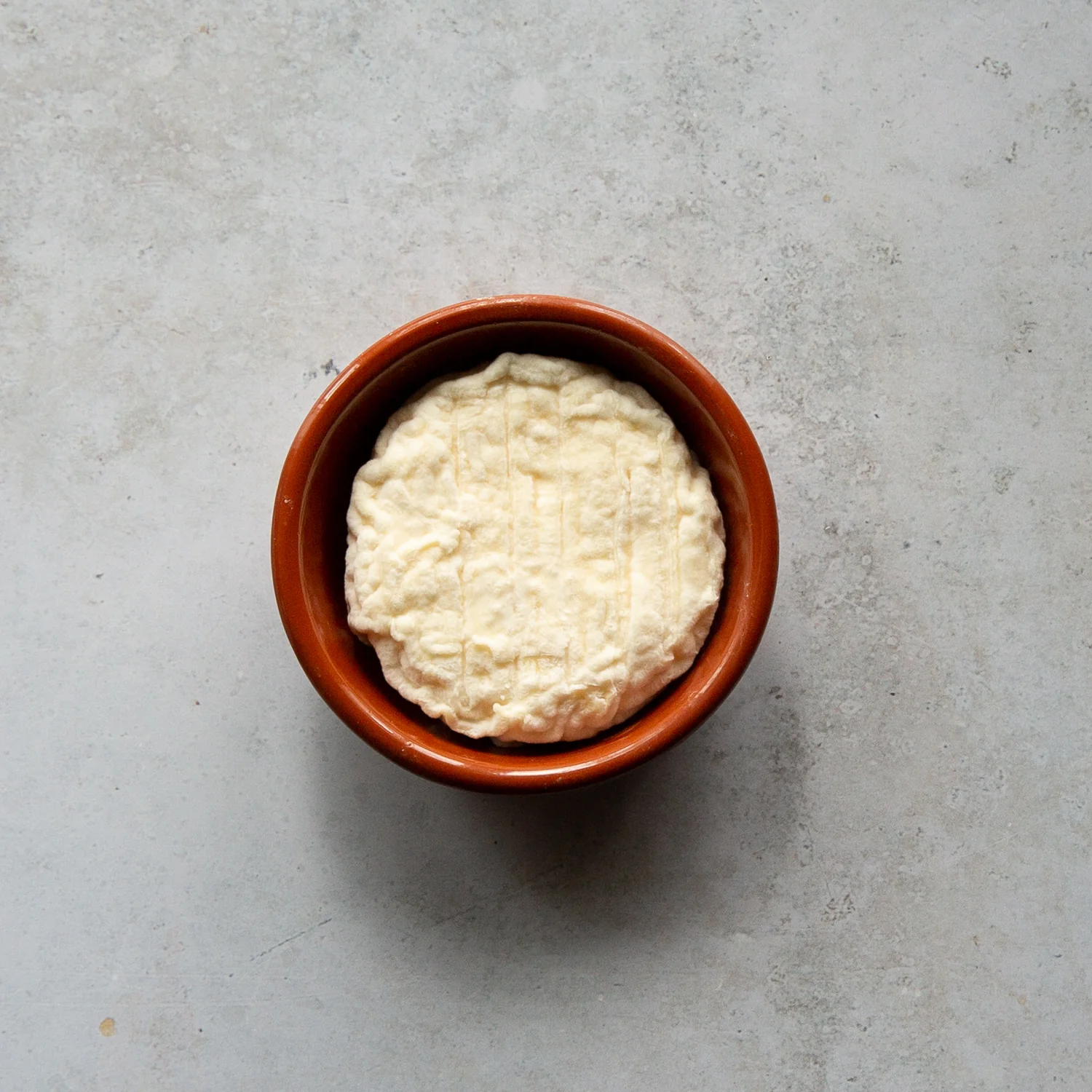
Saint-Marcellin IGP — a small, soft cow's milk cheese from the Dauphiné, in the foothills of the Vercors massif in the Isère département. It is one of the defining cheeses of the Rhône-Alpes and holds IGP (Indication Géographique Protégée) status. Each cheese weighs around 80g and arrives in a traditional ceramic crock (coupelle), which is both the traditional serving vessel and the most practical way to contain it — because at full ripeness, Saint-Marcellin is not so much a cheese you slice as one you spoon.
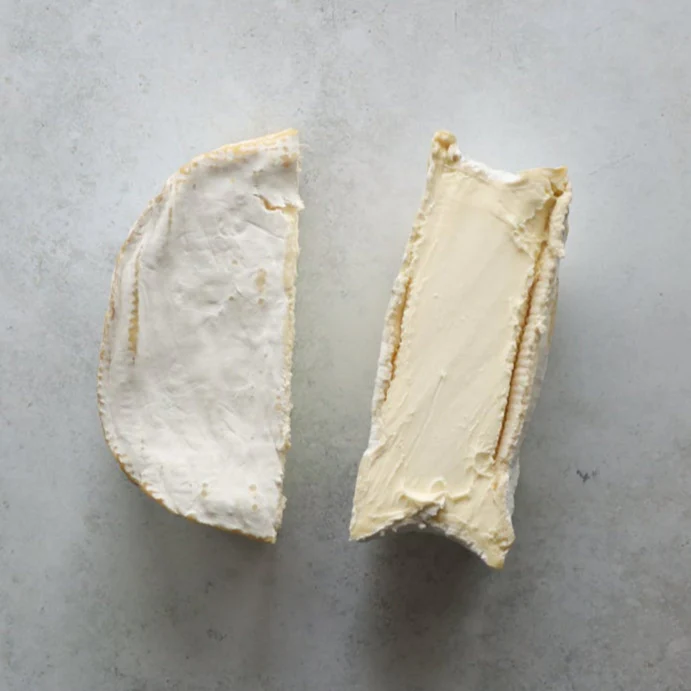
The rind is thin, wrinkled, and slightly mouldy — cream-coloured with patches of grey and blue. When young, the paste is firm and chalky with a mild, lactic freshness. As it ripens, it softens dramatically from the outside in, and the flavour develops: mushroomy, nutty, with a rich, savoury depth and a slight tang. At full maturity, the entire cheese is liquid beneath the rind — unctuous, creamy, and intensely flavoured. The coupelle holds it together. This is a cheese where timing matters and personal preference determines when you eat it — some people want it young and firm, most want it flowing.
Saint-Marcellin was historically made from goat's milk and transitioned to cow's milk during the 19th century as cattle farming expanded in the Dauphiné. It has been made in this region since at least the 15th century.
Origin: Isère, Dauphiné, France (IGP)
Ingredients: Cow's milk, salt, rennet, starter cultures.
Storage: Refrigerate in the crock. Eat within a few days of receipt. This is a living cheese that ripens quickly — each day it will be softer and stronger than the day before. Bring to room temperature before eating.
Net: 80g (in ceramic crock)
Allergens: Milk.
Saint-Marcellin IGP — a small, soft cow's milk cheese from the Dauphiné, in the foothills of the Vercors massif in the Isère département. It is one of the defining cheeses of the Rhône-Alpes and holds IGP (Indication Géographique Protégée) status. Each cheese weighs around 80g and arrives in a traditional ceramic crock (coupelle), which is both the traditional serving vessel and the most practical way to contain it — because at full ripeness, Saint-Marcellin is not so much a cheese you slice as one you spoon.
The rind is thin, wrinkled, and slightly mouldy — cream-coloured with patches of grey and blue. When young, the paste is firm and chalky with a mild, lactic freshness. As it ripens, it softens dramatically from the outside in, and the flavour develops: mushroomy, nutty, with a rich, savoury depth and a slight tang. At full maturity, the entire cheese is liquid beneath the rind — unctuous, creamy, and intensely flavoured. The coupelle holds it together. This is a cheese where timing matters and personal preference determines when you eat it — some people want it young and firm, most want it flowing.
Saint-Marcellin was historically made from goat's milk and transitioned to cow's milk during the 19th century as cattle farming expanded in the Dauphiné. It has been made in this region since at least the 15th century.
Origin: Isère, Dauphiné, France (IGP)
Ingredients: Cow's milk, salt, rennet, starter cultures.
Storage: Refrigerate in the crock. Eat within a few days of receipt. This is a living cheese that ripens quickly — each day it will be softer and stronger than the day before. Bring to room temperature before eating.
Net: 80g (in ceramic crock)
Allergens: Milk.
Original: $6.77
-70%$6.77
$2.03Description
Saint-Marcellin IGP — a small, soft cow's milk cheese from the Dauphiné, in the foothills of the Vercors massif in the Isère département. It is one of the defining cheeses of the Rhône-Alpes and holds IGP (Indication Géographique Protégée) status. Each cheese weighs around 80g and arrives in a traditional ceramic crock (coupelle), which is both the traditional serving vessel and the most practical way to contain it — because at full ripeness, Saint-Marcellin is not so much a cheese you slice as one you spoon.
The rind is thin, wrinkled, and slightly mouldy — cream-coloured with patches of grey and blue. When young, the paste is firm and chalky with a mild, lactic freshness. As it ripens, it softens dramatically from the outside in, and the flavour develops: mushroomy, nutty, with a rich, savoury depth and a slight tang. At full maturity, the entire cheese is liquid beneath the rind — unctuous, creamy, and intensely flavoured. The coupelle holds it together. This is a cheese where timing matters and personal preference determines when you eat it — some people want it young and firm, most want it flowing.
Saint-Marcellin was historically made from goat's milk and transitioned to cow's milk during the 19th century as cattle farming expanded in the Dauphiné. It has been made in this region since at least the 15th century.
Origin: Isère, Dauphiné, France (IGP)
Ingredients: Cow's milk, salt, rennet, starter cultures.
Storage: Refrigerate in the crock. Eat within a few days of receipt. This is a living cheese that ripens quickly — each day it will be softer and stronger than the day before. Bring to room temperature before eating.
Net: 80g (in ceramic crock)
Allergens: Milk.