Tropea Onions
A southern Italian onion with PDO (Protected Designation of Origin) status, grown exclusively within 60 miles of the Calabrian coast around the town of Tropea. The Cipolla Rossa di Tropea Calabria IGP is one of the most celebrated onion varieties in Italian cooking, and the geographical restriction exists for good reason — the combination of sandy, well-drained coastal soils, mild winters, and the moderating influence of the Tyrrhenian Sea produces an onion with unusually high sugar content and low pungency that cannot be reliably replicated elsewhere.
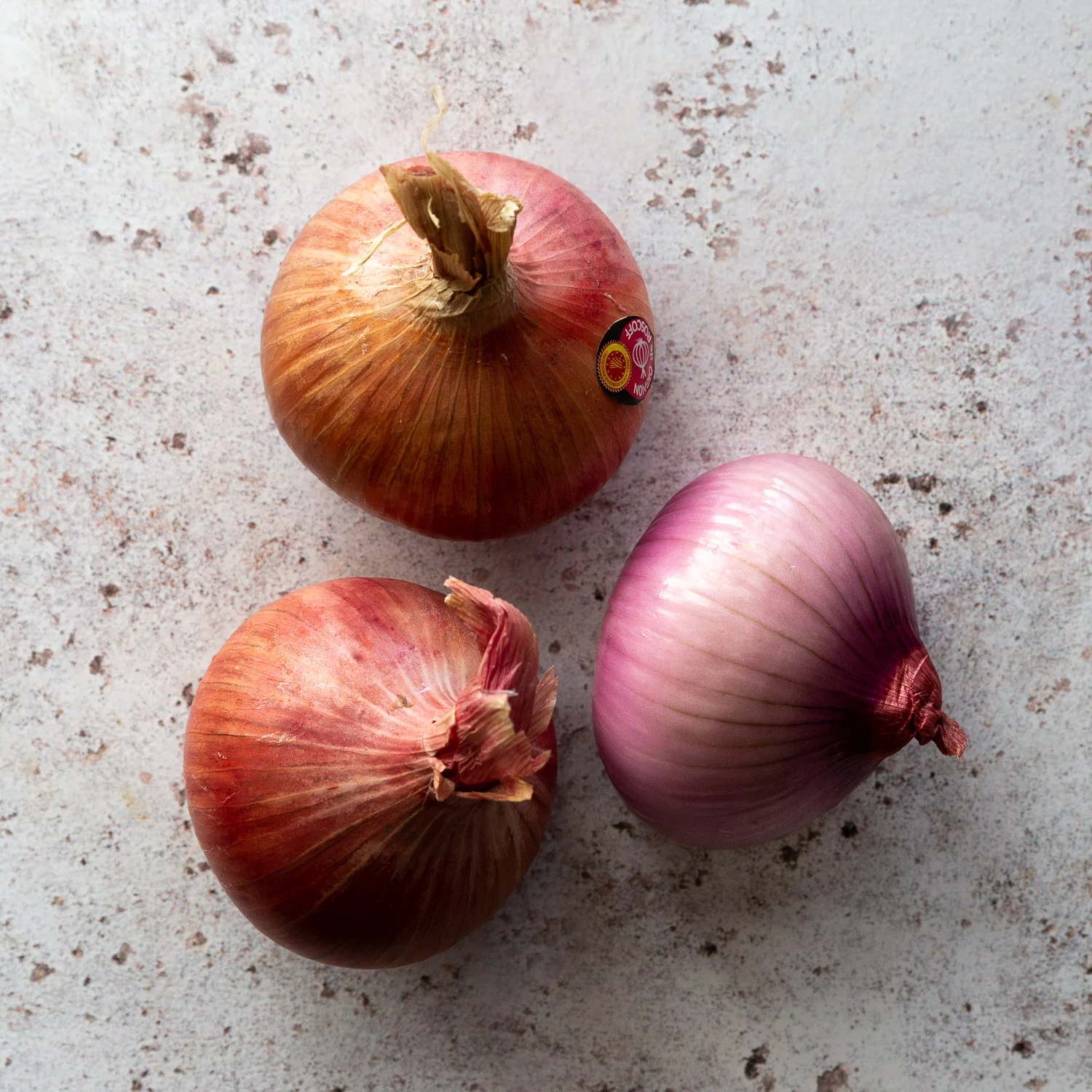
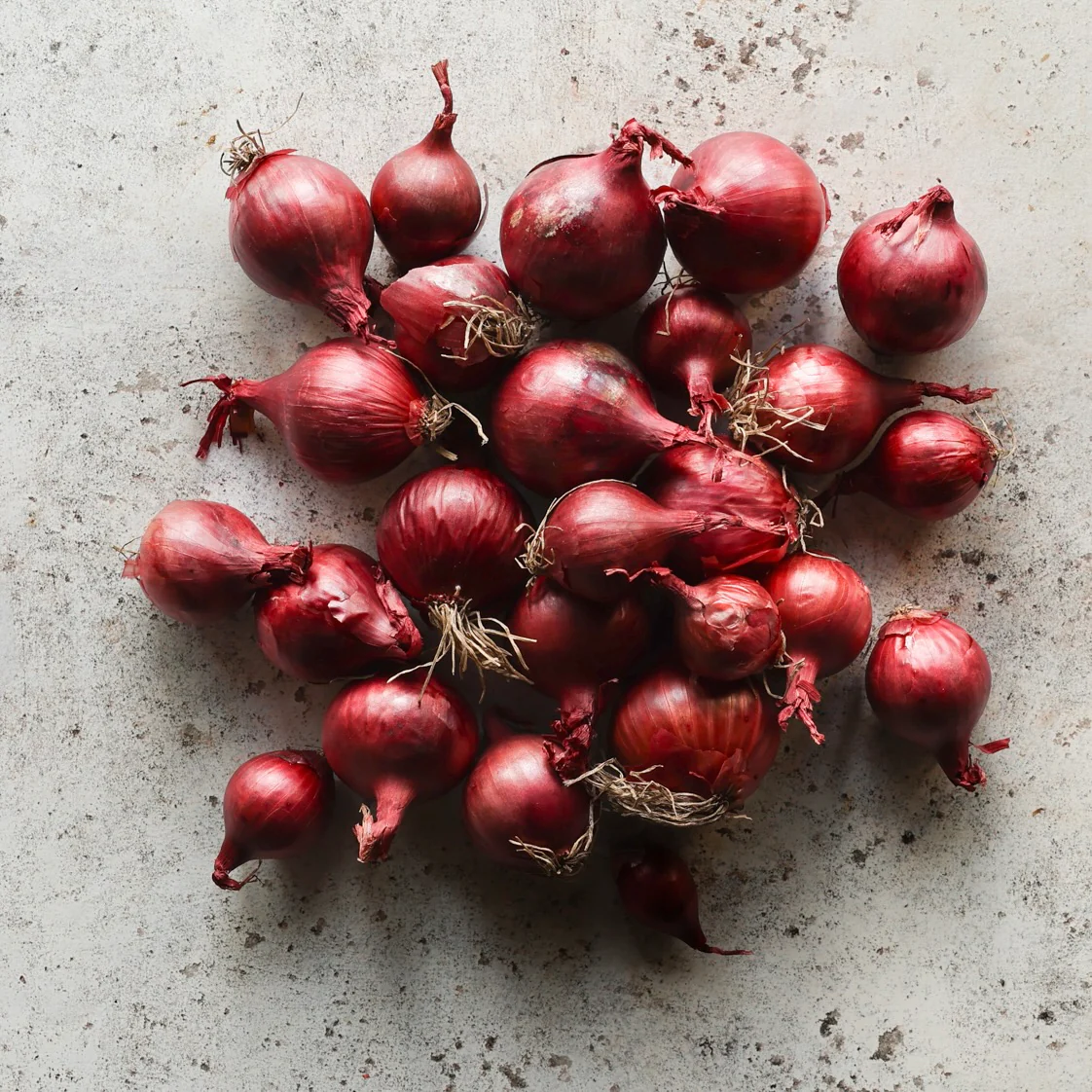
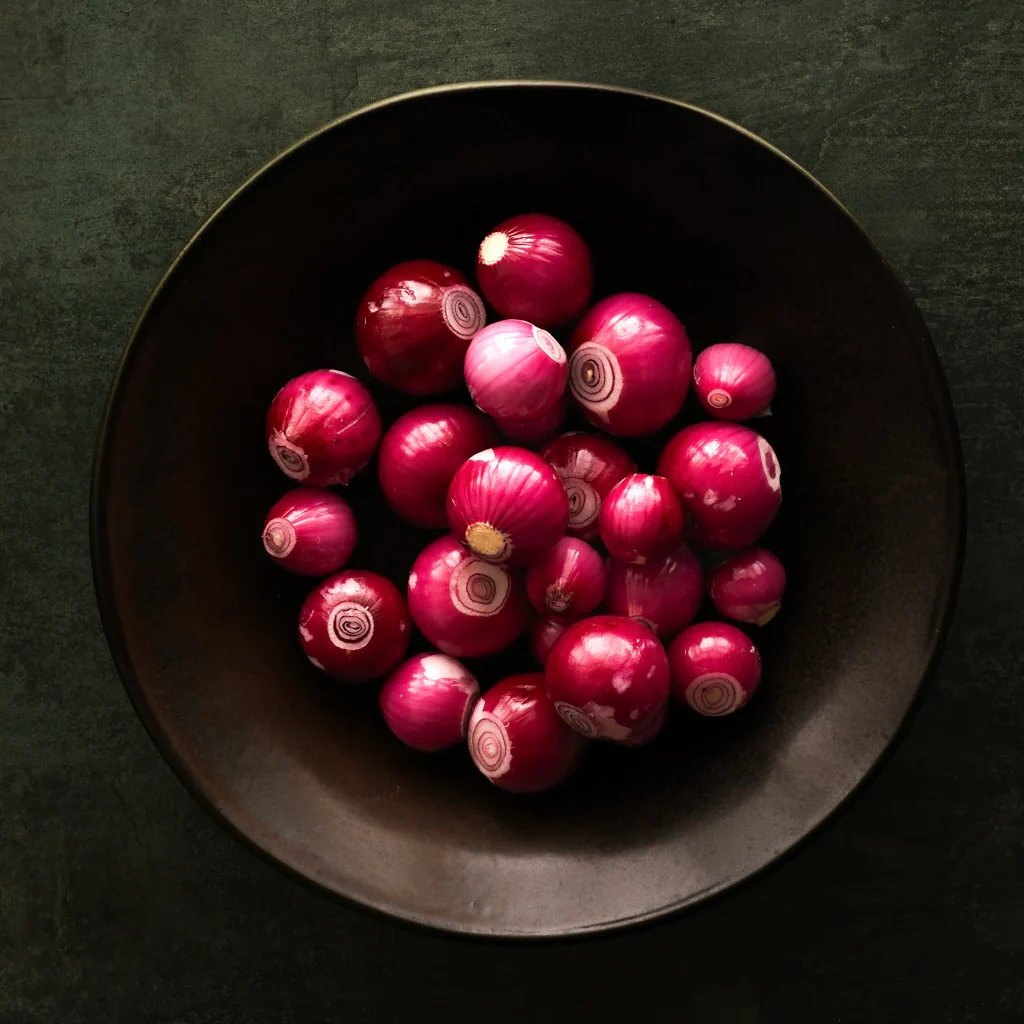
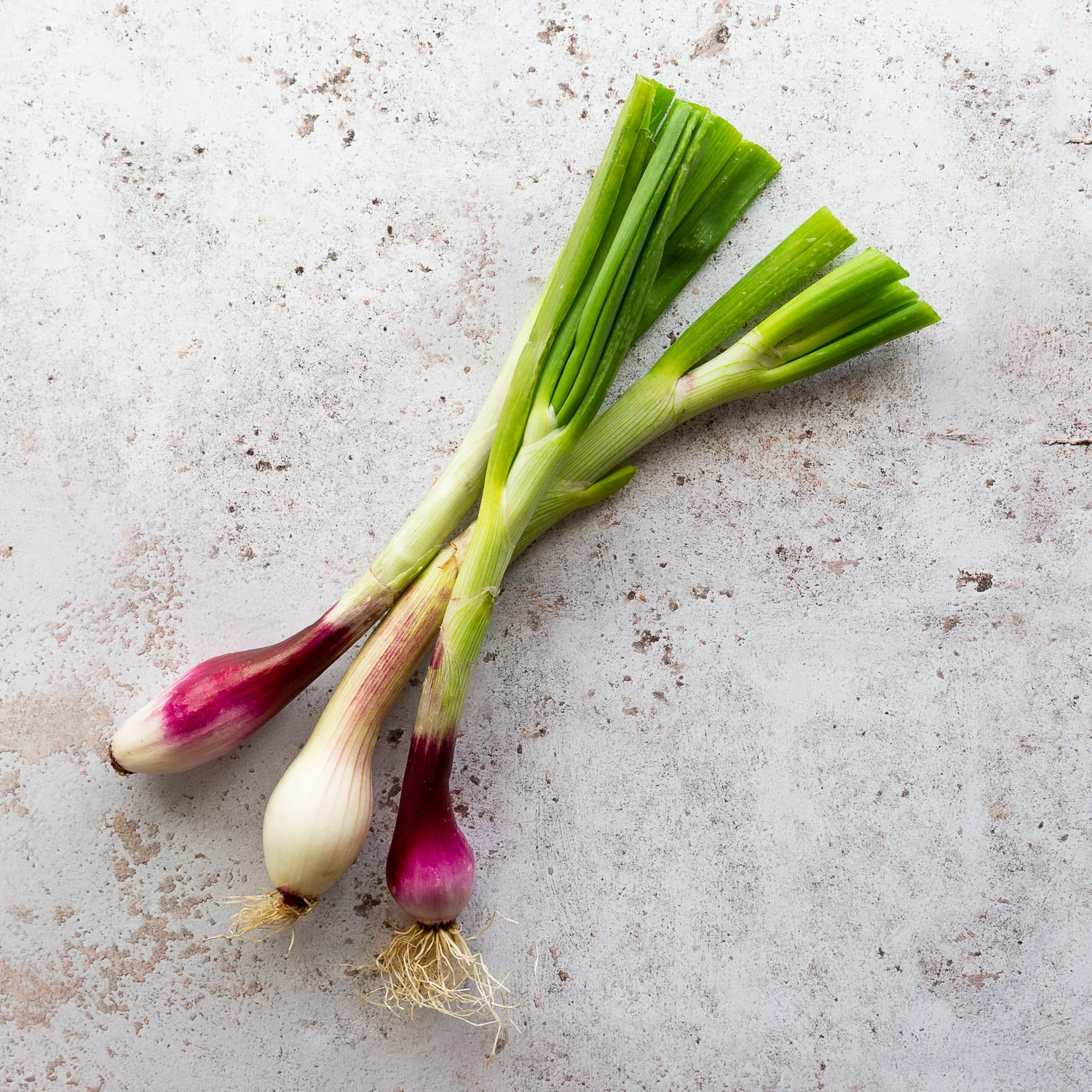
The bulbs are elongated rather than round, with a deep reddish-purple skin and layers that shade from violet at the outside to pale pink and white at the centre. The flesh is crisp, juicy, and notably mild — mild enough to eat raw without the eye-watering sharpness of a standard red onion. This mildness is not a matter of perception; Tropea onions contain lower concentrations of pyruvic acid, the sulphur compound responsible for the harsh bite and tear-inducing effect of most alliums. The result is an onion you can slice into a salad or onto a sandwich and eat comfortably without cooking.
That sweetness makes them equally good cooked, where they caramelise quickly and deeply. Tropea onions are the traditional base for 'nduja and Calabrian onion jam, and they are widely used across southern Italian cooking in everything from frittatas to slow-cooked ragùs, where their natural sugar contributes body and depth without the need for added sweetness.
Origin: Tropea, Calabria, Italy (PDO).
Ingredients: Red onions (Allium cepa).
A southern Italian onion with PDO (Protected Designation of Origin) status, grown exclusively within 60 miles of the Calabrian coast around the town of Tropea. The Cipolla Rossa di Tropea Calabria IGP is one of the most celebrated onion varieties in Italian cooking, and the geographical restriction exists for good reason — the combination of sandy, well-drained coastal soils, mild winters, and the moderating influence of the Tyrrhenian Sea produces an onion with unusually high sugar content and low pungency that cannot be reliably replicated elsewhere.
The bulbs are elongated rather than round, with a deep reddish-purple skin and layers that shade from violet at the outside to pale pink and white at the centre. The flesh is crisp, juicy, and notably mild — mild enough to eat raw without the eye-watering sharpness of a standard red onion. This mildness is not a matter of perception; Tropea onions contain lower concentrations of pyruvic acid, the sulphur compound responsible for the harsh bite and tear-inducing effect of most alliums. The result is an onion you can slice into a salad or onto a sandwich and eat comfortably without cooking.
That sweetness makes them equally good cooked, where they caramelise quickly and deeply. Tropea onions are the traditional base for 'nduja and Calabrian onion jam, and they are widely used across southern Italian cooking in everything from frittatas to slow-cooked ragùs, where their natural sugar contributes body and depth without the need for added sweetness.
Origin: Tropea, Calabria, Italy (PDO).
Ingredients: Red onions (Allium cepa).
Original: $15.57
-70%$15.57
$4.67Description
A southern Italian onion with PDO (Protected Designation of Origin) status, grown exclusively within 60 miles of the Calabrian coast around the town of Tropea. The Cipolla Rossa di Tropea Calabria IGP is one of the most celebrated onion varieties in Italian cooking, and the geographical restriction exists for good reason — the combination of sandy, well-drained coastal soils, mild winters, and the moderating influence of the Tyrrhenian Sea produces an onion with unusually high sugar content and low pungency that cannot be reliably replicated elsewhere.
The bulbs are elongated rather than round, with a deep reddish-purple skin and layers that shade from violet at the outside to pale pink and white at the centre. The flesh is crisp, juicy, and notably mild — mild enough to eat raw without the eye-watering sharpness of a standard red onion. This mildness is not a matter of perception; Tropea onions contain lower concentrations of pyruvic acid, the sulphur compound responsible for the harsh bite and tear-inducing effect of most alliums. The result is an onion you can slice into a salad or onto a sandwich and eat comfortably without cooking.
That sweetness makes them equally good cooked, where they caramelise quickly and deeply. Tropea onions are the traditional base for 'nduja and Calabrian onion jam, and they are widely used across southern Italian cooking in everything from frittatas to slow-cooked ragùs, where their natural sugar contributes body and depth without the need for added sweetness.
Origin: Tropea, Calabria, Italy (PDO).
Ingredients: Red onions (Allium cepa).